
Your Old Devices Depend on Dying Sensors. The Silicon Labs Incident Proves It. Read this paper before you are surprised.

https://www.cambridge.org/engage/coe/article-details/6a054b304770e67d92e8c7a2
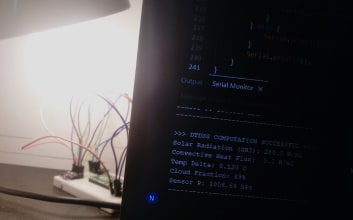
The Silicon Labs Si7021 temperature and humidity sensor was used widely in embedded hardware for many years. In January 2025, it was discontinued. The discontinuation was not caused by weak measurement performance, aging design, or ordinary market decline. It came from material compliance issues linked to Polybenzoxazole insulation and PFAS-related regulatory pressure. There was no direct replacement from the manufacturer when this happened. That made a sudden disruption ans collapse for existing designs. Boards, firmware, and structural plans had already been built around the sensor. This report uses that event as a case study. It also describes the Differential Temporal Derivative Soft Sensing framework, abbreviated here as DTDSS, as a way to keep practical measurement capability after this kind of part loss. Under this framework, lower-cost replacement sensors such as the Aosong AHT20 can still be used for useful environmental measurement, including estimation of solar radiation and surface heat flux without a pyranometer.